 |
Eusebius
An operating systemWritten in kaba. It was born from questions about the deepest depths of the mysterious box we're currently operating. 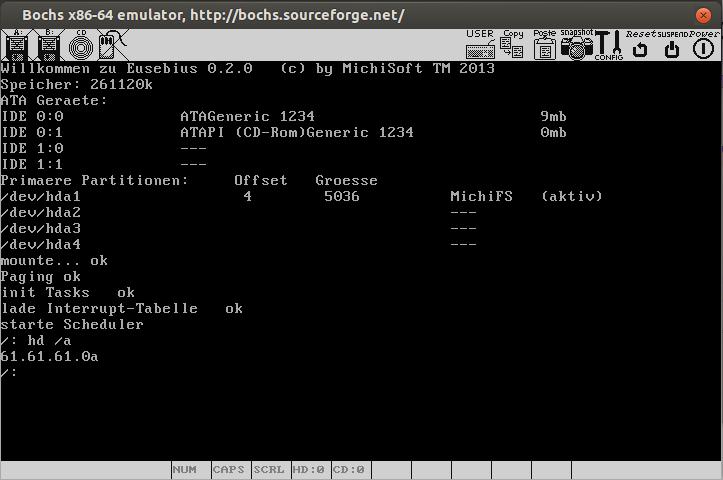 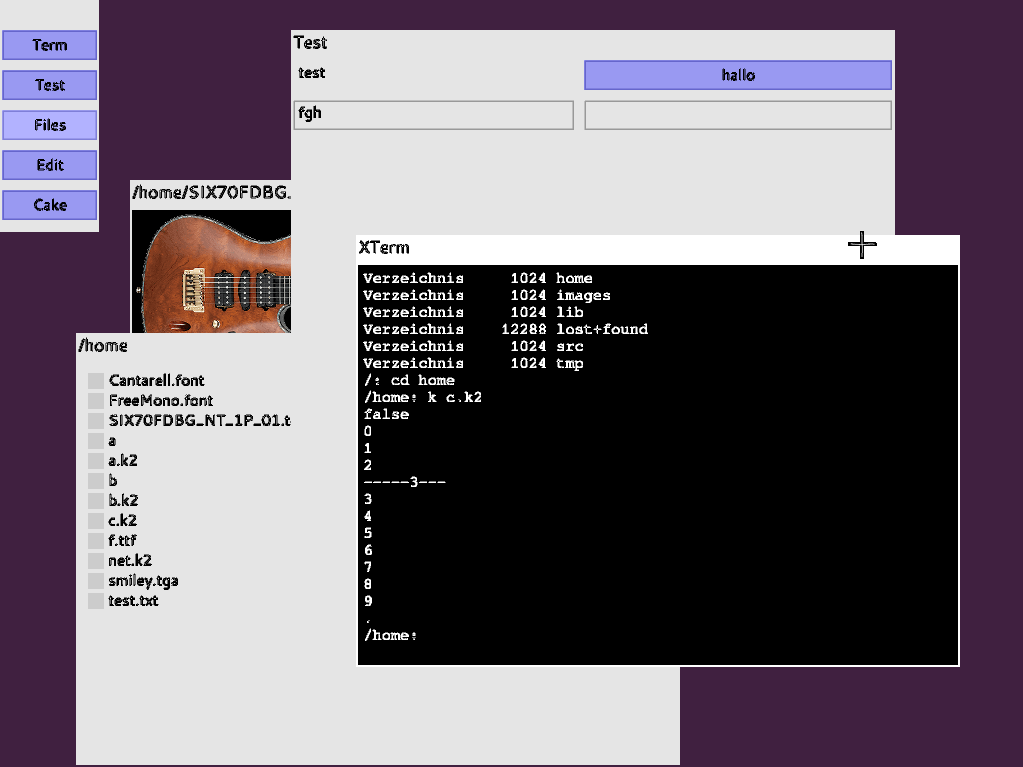 KernelFeatures:
The kernel is written in "low-level" kaba, i.e. all default library functions are disabled. The kernel automatically loads a pure-kaba implementation of the default library and makes it available to all further tasks, allowing them to use convenient features like dynamic arrays and heap objects etc. Desktop environmentA VESA driver is implemented by the user-space windows server. A client can create a window. The contents of the window is shared memory between client and server. The client is responsible for drawing text and buttons into the shared memory, the server will render the windows into the video memory. Future plans(probably never...)
There were also thoughts of going into a micro-kernel direction. With only memory- and task-managing done by the kernel and most other services, like the filesystem, handled by userspace tasks. PlatformExclusively designed for 32 bit x86 machines. Earlier versions were tested on real hardware. Later, for convenience, only virtual machines like bochs and qemu were used. |